 Search
‘Precarious, exhausting, and unfair’: How online censors stifle erotic art
22nd October 2025, 12:54 pm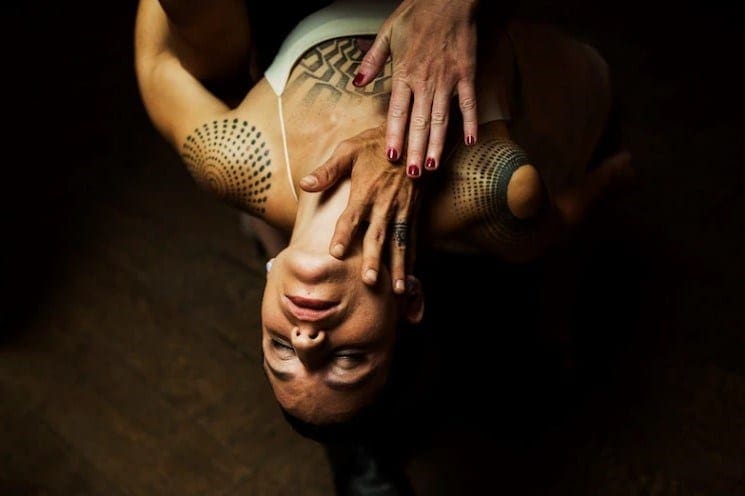
Courtesy of ERIKALUST
In an AW25 collection dedicated to “bad taste”, the designer Duran Lantink sent a male model down the catwalk in a pair of fake, silicone breasts. More recently, at his debut show as creative director of Jean Paul Gaultier, the designer went in for round two with an irreverent parade of anatomical skinsuits. Both shows were among the more hotly-debated moments of their respective fashion seasons, throwing up a bunch of conceptual questions. Was Lantink making a statement about human, and especially women’s, bodies? Or was he using female-presenting bodies as a cheap punchline? Was there some even deeper meaning? If so, what was the deeper meaning? There was lots of conversation, and yet no sign of a clear consensus.
At the same time, though, another kind of debate raged in the shadows. Not a debate between humans, but machines: how to mediate Duran Lantink’s antics? More specifically, what to do with the images and videos that proliferate after his shows? Since 2008, Meta’s censorship policy has banned images of nudity – including, controversially, nipples – across platforms like Instagram and Facebook. These rules are enforced by thousands of human moderators and, of course, AI. But in 2015, the company updated its guidelines to allow exceptions for nudity shared in an artistic context.
If a pair of bare fake boobs is strapped to a model and paraded down a catwalk, does that constitute an act of artistic expression? says one algorithm to the other. How is it different from an OnlyFans model sharing a topless selfie? It’s difficult to know how a well-meaning algorithm should proceed: a straight-up ban of the offending account, a ‘shadow-ban’ (which quietly limits their interactions with other users) or a mere warning. Is it enough to hide the image behind a ‘sensitive content’ screen? Does it need to be pulled from the platform altogether?

TOM OF FINLAND © Tom of Finland Foundation
Of course, the censorship of erotic art goes back even further than the early days of the social media. Back in the 1950s, Tom of Finland had to disseminate his hypersexualised male portraits in beefcake magazines dedicated to showcasing “fit” and “healthy” bodies–for educational purposes, of course!–to get around homophobic laws. Other artists that have rubbed up against IRL content restrictions, in one way or another, range from Madonna to Robert Mapplethorpe to Arvida Byström. The problem is: The internet was supposed to open up new avenues for these kinds of artists to share their art. In practice, things are looking as stifled as ever.
As a director at Tom of Finland Foundation, Richard Villani has experienced the tightening of online censorship firsthand:
A couple of months ago, I got a notice from Instagram about an image from two or three years ago, from our Art & Culture Festival, that they were removing because of community standards. I found that interesting. I don’t know if someone reported it, or somehow the algorithm picked it up.
This, of course, is part of the problem: Social media’s censorship systems are difficult to understand. The words used in their guidelines are vague and open to interpretation (like Tumblr allowing “nudity, mature subject matter, or sexual themes” but not “sexually explicit acts”), and the algorithms that enforce them are totally opaque. Villani remembers another situation where he was explaining to the photographer Nick Knight that Tom of Finland Foundation is perpetually “shadowbanned” on Instagram. “He was like, ‘What is that?’” Villani says. The resulting conversation led to the collaborative 2024 exhibition titled Shadow-Ban, full of NSFW works that wouldn’t last two minutes online. However, it’s not a great sign of the times when artists don’t understand the limitations of the systems that are supposed to help them share their work–when conversations about what’s permissible take place in private, or in an algorithmic ‘black box’.
“Obviously, a lot of the artists I know have been dealing with this for years,” he adds. “And they’re learning how to navigate it, whether it’s joining different platforms or having an email list.” For many artists, though, this can involve leaving behind an audience that’s been built up over many years. Meanwhile, the ones who stay behind have to make a different kind of sacrifice, “directly managing” their content so that it flies under the radar. They might scribble out a nipple in a photograph, place an emoji over a bare bum, or even change the kind of content they create at a more fundamental level, to make it ‘less erotic’. In many cases, this also means losing the creative spark–like Lantink’s nudes, or a particularly provocative Tom of Finland sketch–that ignites interesting conversations on the internet about what we find acceptable and why. As the legacy of artists like Tom of Finland have shown, these conversations can lay the groundwork for significant social and political shifts in the future.
Erika Lust says, “Censorship wants to make you doubt yourself, to internalize shame. Resist that. Your work matters. Erotic expression is human expression, and the world needs your voice. Finally, find allies–other artists, activists, sex educators. Together, you’re stronger, louder, harder to erase.”

READ THE COMPLETE ARTICLE BY THOM WAITE
Published: 22nd October 2025
Tags: Dazed, Erika Lust, Richard Villani, Shadow-Ban, Thom Waite